


Understanding Traditional Funerals: A Glimpse into Time-Honoured Traditions
Funerals are an important part of human civilisation because they provide comfort during a time of public grieving while serving as a stark reminder of how fleeting life is. Traditional funerals in Jamaica, like in many other countries, have developed over time, incorporating a variety of rites, practises, and manners. The many elements of a traditional funeral are covered in this page.
1. The Announcement of Passing
It is customary to make an announcement of a loved one’s death. Local newspapers’ obituary pages have traditionally been used for this purpose, but in the current digital age, online tributes and social media announcements have grown more popular.
2. The Funeral Service
Held at a church, chapel, or funeral home, the service typically comprises:
- Eulogy: A tribute speech, usually delivered by close family or friends, celebrating the life of the departed loved one.
- Hymns and Readings: Selected hymns, accompanied by passages from religious or secular texts, serve to offer comfort.
- Prayers: For those of religious disposition, prayers are an integral component, invoking peace for the departed.
3. The Committal Service
A committal service is held at the grave or crematorium after the burial service. Before the deceased is buried or cremated, one last farewell is said in this location.
4. Dress Code and Floral Tributes
Mourning attire traditionally consists of dark, sombre clothing. Black is the predominant colour, but navy or dark grey are also considered appropriate. Hats and veils were once commonplace, especially for women, but have become less frequent in modern times.
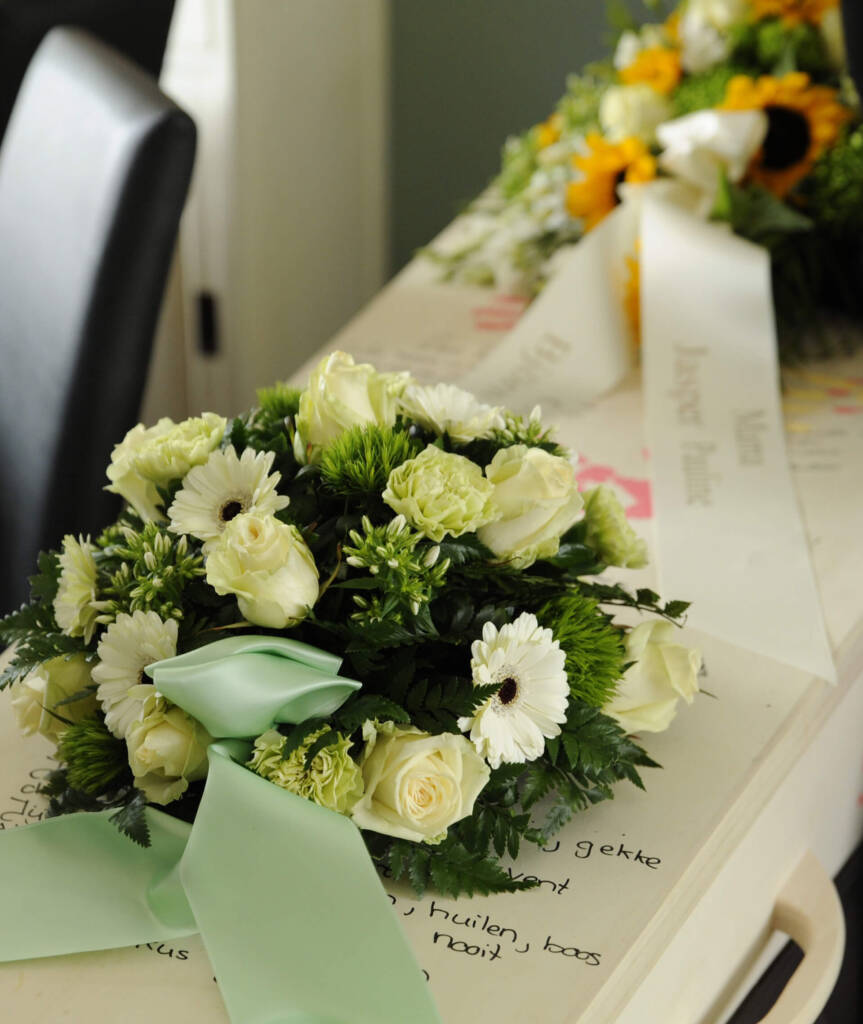
Flowers have always played an integral role in funerals. Floral tributes, whether in the form of wreaths, bouquets or bespoke shapes, are placed on the coffin or at the gravesite. Some families may request donations to a preferred charity instead of, or in addition to, flowers.
5. Gathering
After the formal ceremonies, it’s common to hold a gathering. This offers an opportunity for friends and family to come together, share memories, and offer mutual support. Refreshments, often including food, drinks, sandwiches, and cakes, are typically provided.
7. Memorial Stones and Plaques
In the weeks or months following the burial or cremation, families often choose a memorial stone or plaque. These serve as enduring tributes, providing a place for loved ones to visit and remember.
In Conclusion:
The intricate tapestry of traditional funerals is a heartfelt reflection of the depth of human connections and the myriad ways we seek to understand, mourn, and celebrate life, even in its passing. It’s essential to remember that, at the core of these customs and rituals lies a collective yearning for comfort, remembrance, and a deep-seated respect for the departed. As we navigate the profound sorrow of loss, the age-old practices of funerals serve as gentle anchors, grounding us amidst the tumult of emotions. They remind us that, in our shared grief, we find strength; in our memories, we find warmth; and in our tributes, we find love everlasting. Whether through a soulful hymn, a comforting embrace, or silent reflection by a graveside, the essence of these ceremonies transcends time, providing a beacon of hope and unity for all who mourn.